成功大學攜手京都大學 共辦第十屆「亞洲人類圈科學研討會」
古都交會,跨域創新 —— 太空科技與永續生存領域開啟合作新篇章。
研討會概況
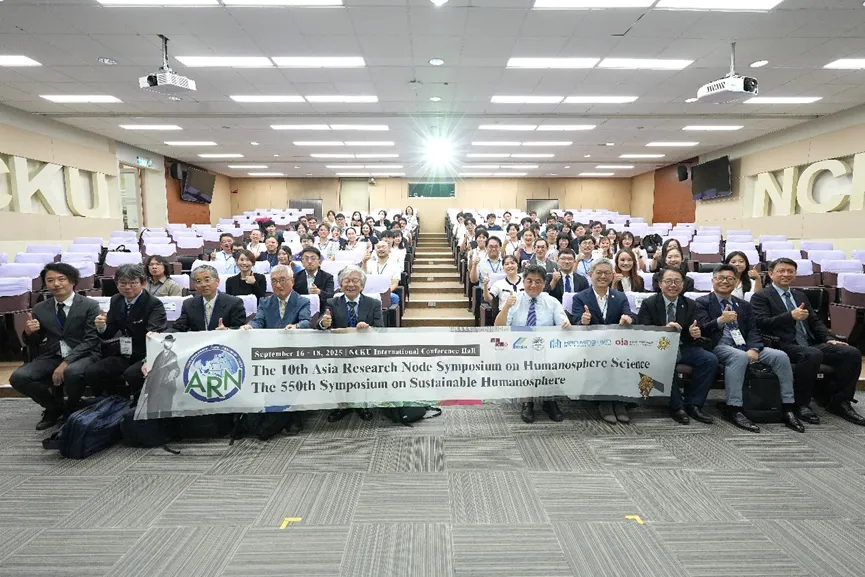
第十屆「亞洲人類圈科學研討會」(The 10th Asia Research Node Symposium on Humanosphere Science, ARN 2025)於 2025 年 9 月 16 日至 18 日於國立成功大學圓滿落幕。本屆盛會由成功大學夏漢民太空科技中心與規劃設計學院,攜手日本京都大學永續生存研究中心(RISH)共同主辦。
與會者總計 96 位,包含 38 位京都大學學者,以及來自東京大學、名古屋大學之學者,台灣端則有包含中央研究院及成功大學等共 9 所機構之學者參加。
跨國合作備忘錄簽署
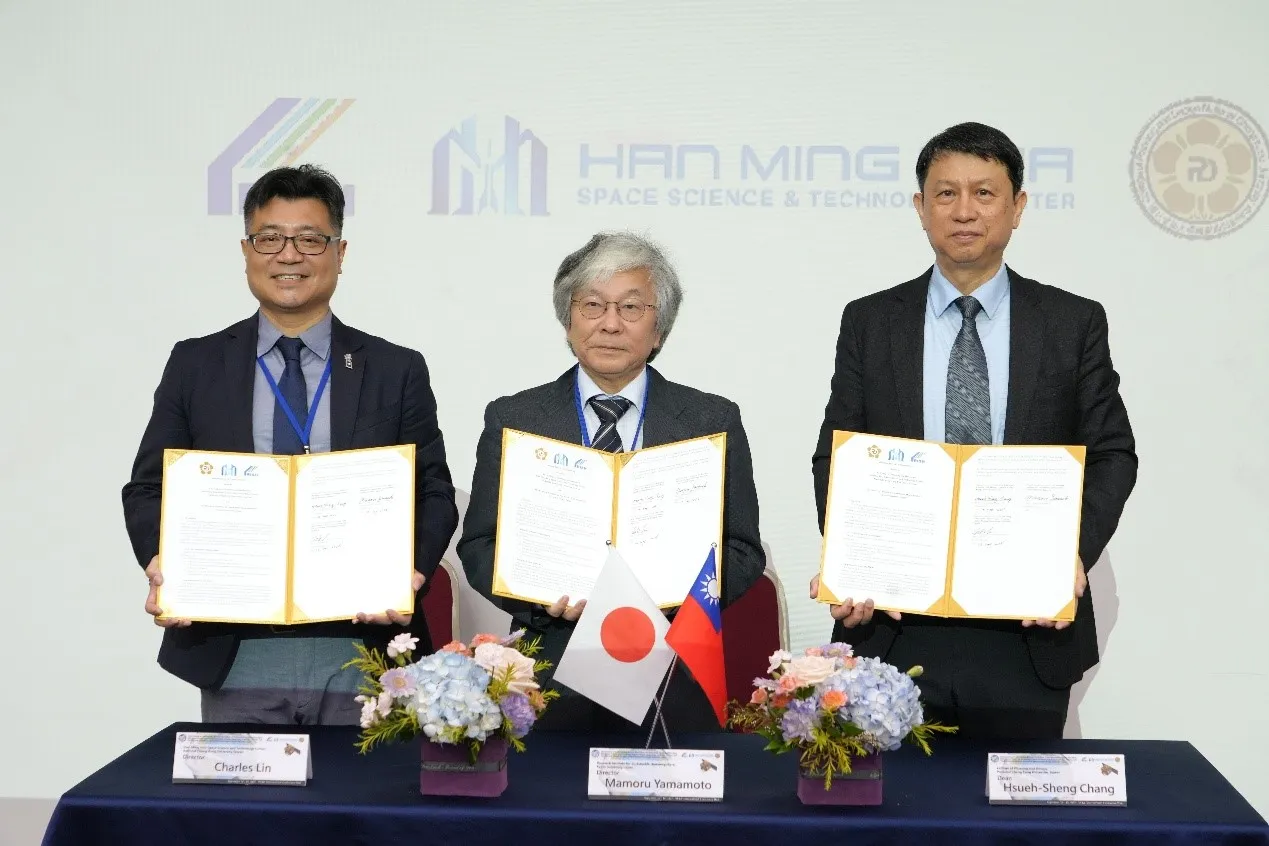
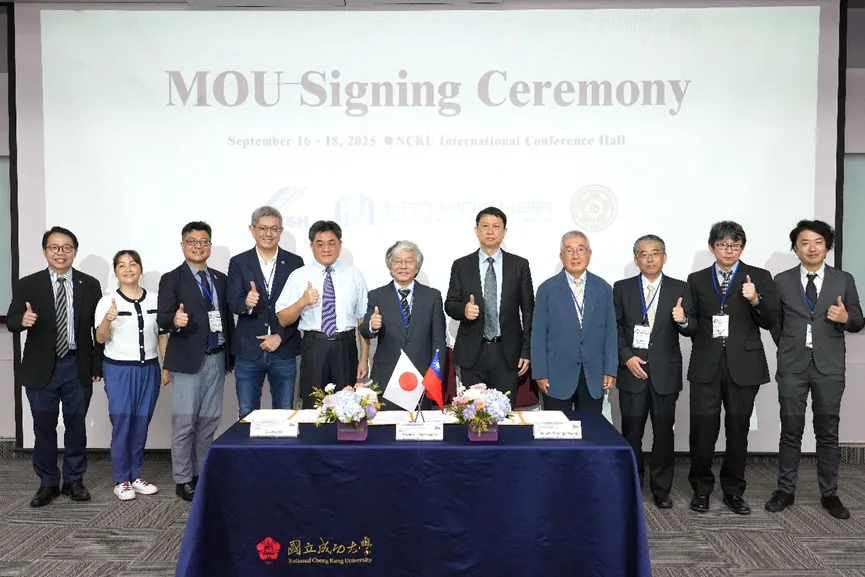
本次研討會的重大成果是完成跨國合作備忘錄(MOU)的簽署,由京都大學永續生存研究中心山本衛主任、成大夏漢民太空科技中心林建宏主任以及成大規劃設計學院張學聖院長共同簽署,在成大張始偉副校長、吳秉聲助理副校長、謝孫源國際長、及吳意珣副研發長的見證下正式生效。
此舉象徵臺日雙方在太空科技與永續研究領域深化合作的決心,展現跨領域與跨國界合作的新里程碑。
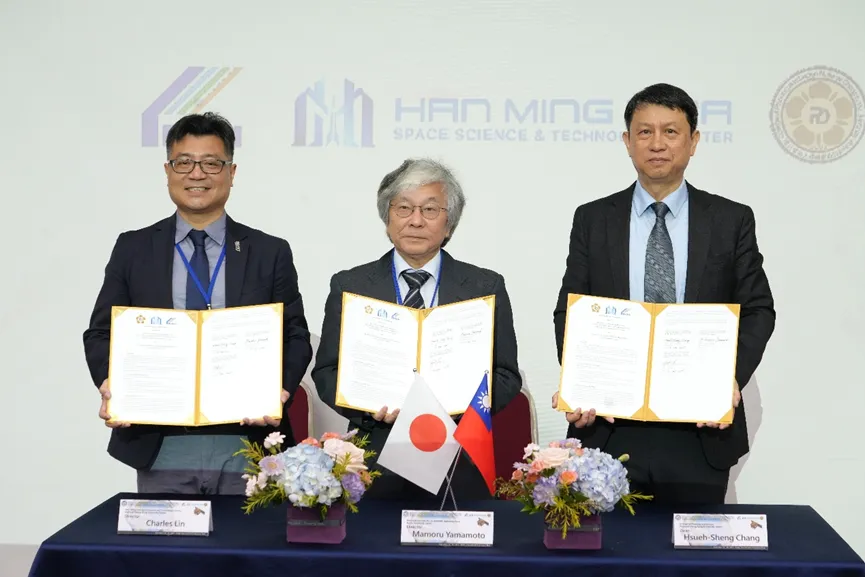
左起:成大夏漢民太空科技中心林建宏主任、京都大學永續生存研究中心山本衛主任、成大規劃與設計院張學聖院長展示簽署之合作備忘錄。
研究主題與議程
大會以「永續生存」(Sustainability for the Humanosphere)為核心主題,來自日本、臺灣與國際頂尖學研機構的專家學者共襄盛舉。議程涵蓋八大重點領域:
- 衛星酬載與太空工程
- 電離層變化與遙測
- 都市生態與害蟲管理
- 無線通訊與半導體技術
- 木構建築與永續設計
- 綠色能源與生物科技
- 太空天氣
- 新興低碳生質材料
其中,京都大學研究團隊特別展示最新的「奈米纖維素(Nano Cellulose)」研究成果。這項兼具輕量、高強度、透明與可食用特性的次世代生物材料,不僅能廣泛應用於汽車、食品、醫療與建築產業,更在碳捕捉(CCUS)與循環經濟中展現巨大潛力,成為本屆研討會的一大亮點。
副校長致詞與願景
張始偉副校長於開幕式致詞表示,在氣候變遷、能源轉型、災害韌性、公共健康與社會高齡化、以及數位化與人工智慧所帶來的深遠影響下,科學家與工程師的專業研究能為社會提出關鍵解方,協助社區與產業升級轉型,推動跨世代的永續發展。本次合作成為跨領域、跨國界的合作典範,象徵我們攜手推動永續與創新研究的決心。
兩校合作深化與未來規劃
成功大學與京都大學合作關係深厚,近年來已簽署多項合作協議,涵蓋校級與院級層面,推動學生交流與科學研究合作。本次研討會更進一步締結三方合作備忘錄,象徵跨領域與跨國界合作的新里程碑。此外,京都與台南同為歷史悠久的古都,此次攜手不僅深化學術研究,也象徵兩座城市以文化底蘊為基礎,共同追求創新與永續的願景。
張副校長同時展望未來,提及成大與京都大學將於十一月底合作舉辦「成大—京都研究日」,聚焦於「永續」與「防災韌性」兩大關鍵主題。這不僅是學術的交流,更是面對全球氣候極端化、地震與洪水等自然災害的挑戰時,學術界以科學知識服務社會的具體實踐。
古都之約
京都與台南同為歷史悠久的古都,此次攜手不僅深化學術研究,也象徵兩座城市以文化底蘊為基礎,共同追求創新與永續的願景。
共創新未來
透過本屆研討會,成功大學不僅展現臺灣在太空科技與永續領域的研究能量,更透過與京都大學的深度合作,推動國際學研與產業間的跨域連結。隨著 MOU 的簽署與未來合作計畫的啟動,兩校將持續整合資源與專業,攜手打造更具韌性與創新的亞洲研究網絡,共同邁向人類永續生存的新未來。
NCKU and Kyoto University Co-host the 10th Asia Research Node Symposium on Humanosphere Science
Ancient Capitals Unite to Drive Cross-Border Innovation in Space Technology and Sustainability.
Symposium Overview
The 10th Asia Research Node Symposium on Humanosphere Science (ARN 2025) concluded successfully at National Cheng Kung University (NCKU), from September 16 to 18, 2025. Jointly organized by Han-Min Hsia Space Science and Technology Center (NCKU) and College of Planning and Design, together with Kyoto University Research Institute for Sustainable Humanosphere (RISH), the symposium underscored the shared commitment of Taiwan and Japan to advancing research in space technology and sustainability.
A total of 96 participants attended the symposium, including 38 scholars from Kyoto University, as well as representatives from the University of Tokyo and Nagoya University. On the Taiwanese side, scholars from nine institutions, including Academia Sinica and NCKU, were also in attendance.
Memorandum of Understanding Signing
A highlight of the event was the signing of a new Memorandum of Understanding (MOU), marking a milestone in deepening cross-border and interdisciplinary cooperation. The tripartite agreement was jointly signed by Director Mamoru Yamamoto of Kyoto University’s Research Institute for Sustainable Humanosphere, Director Charles Lin of NCKU’s Han-Min Hsia Space Science and Technology Center, and Dean Hsueh-Sheng Chang of NCKU’s College of Planning and Design.
The signing was witnessed by NCKU’s Executive Vice President Shyy-Woei Chang, Senior Vice President Ping-Sheng Wu, Vice President for International Affairs Sun-Yuan Hsieh, and Associate Vice President for Research and Development I-Son Ng.
Prof. Charles Lin, Director of Han-Min Hsia Space Science and Technology Center, Prof. Mamoru YAMAMOTO, Director of Research Institute for Sustainable Humanosphere (RISH), and Prof. Ping-Sheng Wu, Senior Vice President, NCKU, sign a Memorandum of Understanding.
Research Themes & Agenda
With the theme of “Sustainability for the Humanosphere,” ARN 2025 gathered leading scholars and experts from Japan, Taiwan, and international institutions to address some of the world’s most pressing challenges. The discussions spanned eight areas:
- Satellite payloads and space engineering
- Ionospheric variation and remote sensing
- Urban ecology and pest management
- Wireless communications and semiconductor technologies
- Timber architecture and sustainable design
- Green energy and biotechnology
- Space weather
- Emerging low-carbon biomass materials
Among the highlights was a presentation by Kyoto University on nano cellulose, a next-generation biomaterial that is lightweight, strong, transparent, and even edible, with potential applications in the automotive, food, medical, and construction industries. Due to its promise in carbon capture (CCUS) and the circular economy, nano cellulose became one of the most anticipated innovations showcased at the symposium.
Vice President’s Address & Vision
Executive Vice President Chang noted that in the face of profound impacts from climate change, energy transition, disaster resilience, public health, aging populations, as well as the transformative power of digitalization and artificial intelligence, the expertise of scientists and engineers is critical. Their collective research can provide actionable solutions to support community resilience and guide industries through necessary transitions toward sustainability. This collaboration serves as a model for cross-disciplinary and cross-border cooperation, symbolizing our shared commitment to advancing sustainable and innovative research.
NCKU and Kyoto University Deepen Scientific Cooperation with the 10th Asia Research Node Symposium on Humanosphere Science.
Strengthening Ties & Future Collaboration
NCKU and Kyoto University enjoy a long-standing partnership that has grown steadily through multiple agreements at both the university and college levels, fostering student exchange and joint research.
Looking ahead, Executive Vice President Chang mentioned that NCKU and Kyoto University will co-host the “NCKU-KU Research Day” in late November, with a central focus on sustainability and disaster resilience. This event is not merely an academic exchange; it is a tangible demonstration of how universities can serve society in addressing global challenges such as extreme climate events, earthquakes, and flooding. By integrating engineering, urban planning, social sciences, and policy perspectives, we seek to develop innovative, practical solutions that can enhance resilience for both communities and industries.
Ancient Capitals Unite
Beyond academics, the partnership carries symbolic weight: both Kyoto and Tainan are historic capitals, and their collaboration reflects how cultural heritage can inspire a shared vision of innovation and sustainability for the future.
Toward a Shared Future
Through ARN 2025, NCKU demonstrated the strengths of Taiwan in space science and sustainability, while reinforcing collaboration with Kyoto University to foster broader international and industry linkages. With the signing of the new MOU and the launch of future joint initiatives, the two universities are set to integrate resources and expertise, building a more resilient and innovative research network in Asia—and taking concrete steps toward a sustainable future for humanity.
The 10th Asia Research Node Symposium on Humanosphere Science: Eight Key Themes Guide Cross-Border Research to a New Chapter of Sustainability.