會議概況
由成功大學夏漢民太空科技中心與規劃設計學院,攜手日本京都大學永續生存研究中心(RISH)共同主辦,於 2025 年 9 月 16 日至 18 日在國立成功大學圓滿落幕。
與會者總計 96 位,包含來自京都大學、東京大學、名古屋大學等日本頂尖學府,以及台灣中央研究院、國立成功大學等 9 所機構的學者。
核心主題
永續生存(Sustainability for the Humanosphere)
八大重點議題
- 衛星酬載與太空工程
- 電離層變化與遙測
- 都市生態與害蟲管理
- 無線通訊與半導體技術
- 木構建築與永續設計
- 綠色能源與生物科技
- 太空天氣
- 新興低碳生質材料
合作成果
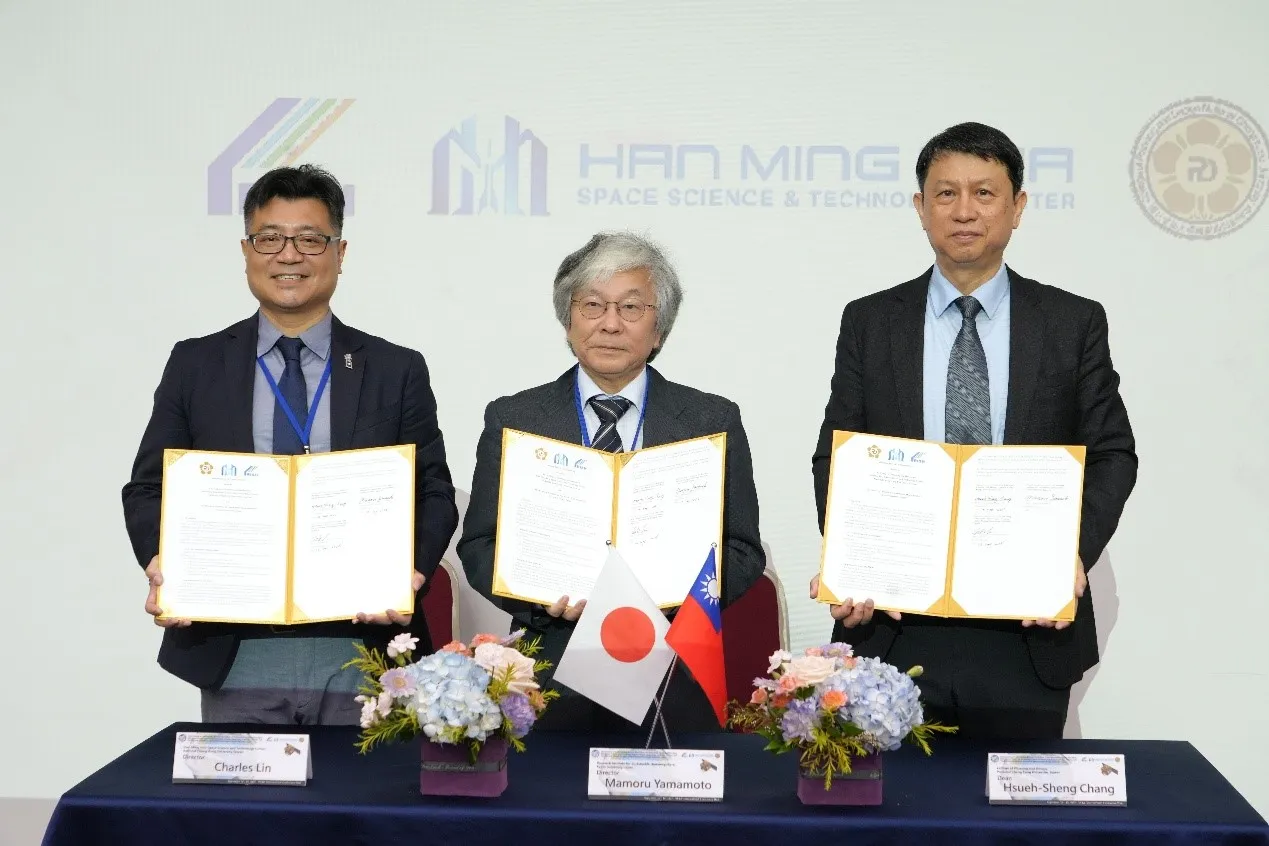
三方簽署跨國合作備忘錄(MOU),象徵臺日雙方在太空科技與永續研究領域深化合作的決心。
更多研討會資訊請參考:亞洲人類圈科學研討會 ARN 2025
Co-hosted by the Han-Min Hsu Center for Space Science and Technology and the College of Planning and Design at NCKU, together with Kyoto University’s Research Institute for Sustainable Humanosphere (RISH), ARN 2025 was held successfully from September 16 to 18, 2025, at NCKU.
A total of 96 participants attended, including scholars from Kyoto University, the University of Tokyo, Nagoya University, Academia Sinica, and other leading institutions in Taiwan and Japan.
Core Theme
Sustainability for the Humanosphere
Eight Key Topics
- Satellite payloads and space engineering
- Ionospheric variability and remote sensing
- Urban ecology and pest management
- Wireless communications and semiconductor technologies
- Timber architecture and sustainable design
- Green energy and biotechnology
- Space weather
- Emerging low-carbon biomass materials
Collaboration Outcome
A tripartite international MOU was signed during the symposium, marking a new milestone in Taiwan–Japan collaboration in space technology and sustainability research.
For more information, visit: ARN 2025